Mechanism Figure Generator
Use the mechanism figure generator to explain how a proposed process could connect an input to an outcome. Define the system, sequence and evidence status of each step. A mechanism figure makes a claim easier to inspect; the illustration itself does not establish that the proposed mechanism occurs.
SEE ACADRAW IN ACTION
Science drawing, from idea to editable figure
Create a science illustration with AI. Refine drawings, build editable diagrams, and convert images to SVG.
Demos play as you scroll into view. Choose a feature to explore.
Trusted by students & researchers from 480+ universities
A global community spanning 60+ countries and regions, from QS top-ranked universities to leading research institutes























University logos belong to their respective institutions and are shown solely to illustrate our user community. They do not imply any partnership or endorsement.
Tool overview
Explore the use cases, workflow, and key things to know.
Build a causal story to review
Arrange the proposed steps in a sequence with clear participants.
Mark uncertainty
Use a defined visual convention for hypotheses and missing links.
Separate schematic and results
Use real evidence outside the illustration to support the mechanism.
Concept reference
Mechanism Figure Generator: a worked example
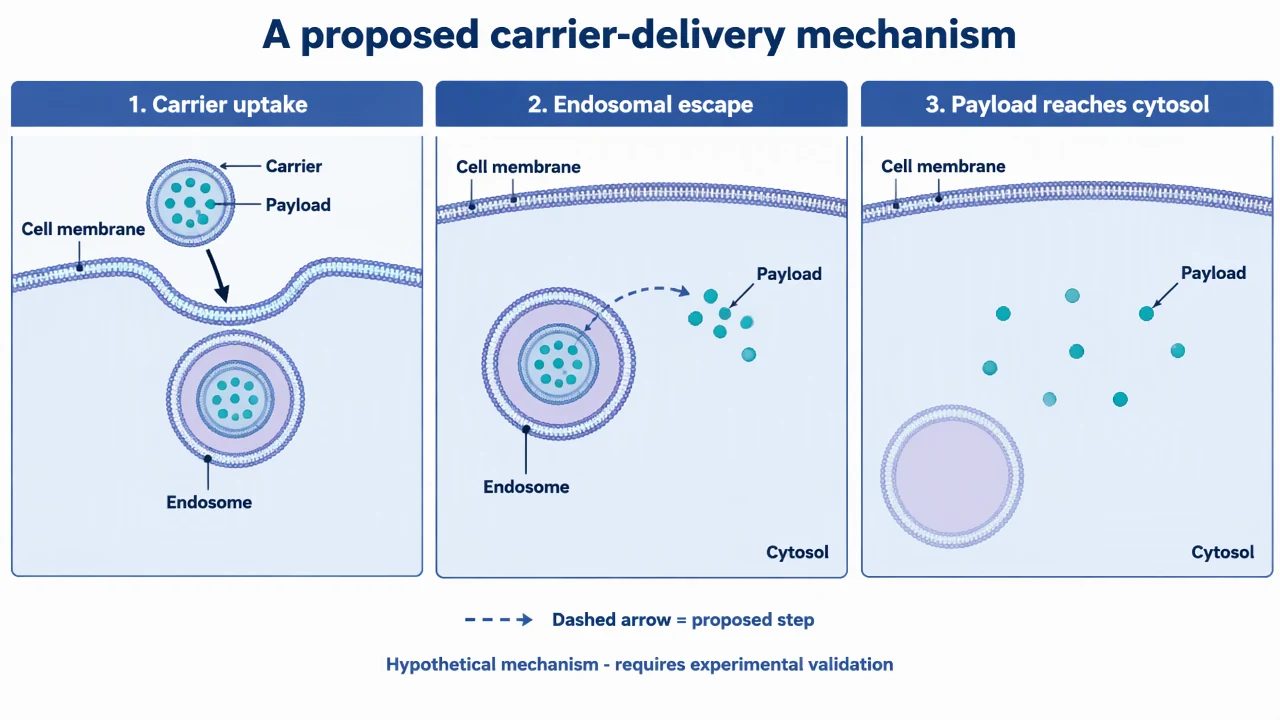
This mechanism figure presents a hypothetical carrier-delivery route: cellular uptake, a proposed endosomal-escape step and payload reaching the cytosol. The dashed arrow marks the proposed step. The schematic does not claim efficient delivery, a particular molecular target, therapeutic benefit or measured performance.
Mechanism Figure Generator: reference key
Use the reference and definitions together. On a small screen, scroll the table horizontally.
| Element | Meaning | Review check |
|---|---|---|
| Input | The initial state or intervention | Specify what enters the system without assuming the desired effect. |
| Intermediate step | An event linking input and outcome | State the participant, location and proposed action. |
| Compartment | Where the step is expected to occur | Distinguish outside the cell, endosome and cytosol in delivery examples. |
| Evidence label | What supports an individual step | Separate direct observation, indirect support and hypothesis. |
| Dashed connection | A defined uncertainty convention | Explain its meaning in the key instead of relying on appearance. |
| Outcome | A stated endpoint | Do not draw efficacy as established unless real evidence supports it. |
Mechanism Figure Generator: plan the content
A mechanism figure should identify what happens, where it happens and what supports each step. Keep established observations, plausible explanations and untested hypotheses visibly distinct.
Write the claim in one sentence
Decide what your mechanism figure is meant to explain before selecting icons. A claim that cannot be stated clearly is difficult to draw responsibly.
Map steps to observations
Keep an accompanying evidence list. Uptake, endosomal escape and downstream activity require different observations and are not interchangeable.
Design for alternative explanations
Ask what other process could produce the same observation. A visual draft should help expose those alternatives rather than hide them.
Common mistakes in a mechanism figure
Drawing a desired outcome as a demonstrated result
A polished mechanism figure can make a tentative explanation look established. Use proposed language and avoid unsupported efficacy symbols.
Treating uptake as delivery to the target
Material inside an endosome is not necessarily free in the cytosol. Show the compartment boundary and distinguish these steps.
Using unexplained dashed arrows
Dashed may mean indirect, uncertain or hypothetical. Choose one meaning and define it in the key.
Mechanism Figure Generator: from brief to reviewed draft
Reading the reference is free. Generating a new draft requires an account and available credits. See current pricing.
Choose Science Drawing for an illustrated draft, or Editable Diagram for separate shapes and labels. Review all definitions, labels and connections before sharing.
- 1
Define claim and evidence status
Tell the mechanism figure generator which steps are observed and which are proposed.
- 2
Draft a compartment-aware sequence
Name participants, locations and the meaning of each arrow; avoid decorative performance claims.
- 3
Review each mechanistic claim
Compare the mechanism figure against the actual evidence, revise uncertain steps and retain an explicit scope note.
Example brief for a mechanism figure
Create a hypothetical carrier-delivery mechanism figure with three stages: carrier uptake, proposed endosomal escape and payload reaching the cytosol. Distinguish cell membrane, endosome and cytosol. Mark the escape step with a dashed arrow defined as proposed. Do not add measured delivery efficiency, target activity or clinical benefit. Label the figure as a hypothesis requiring experimental validation.
Use this prompt in the generatorMechanism Figure Generator: common questions
What does the mechanism figure generator create?
It creates a schematic draft of a process or proposed explanation. It does not establish causality or generate supporting evidence.
Can a mechanism figure show hypotheses?
Yes. Label proposed steps and explain the uncertainty convention so they cannot be mistaken for measured findings.
Is the delivery example a validated treatment?
No. It is a hypothetical teaching schematic without measured delivery efficiency, clinical outcomes or a named therapeutic product.
How is the mechanism figure generator different from the reaction mechanism tool?
This page focuses on process-level causal explanations. The reaction mechanism tool focuses on chemical structures, electron movement and charge conservation.
What should accompany a research mechanism figure?
Provide sources, experimental context, the evidence supporting each claim and a caption distinguishing observation from interpretation.
Sources and editorial notes
Prepared by the AcaDraw product team. Source and diagram check: . This is a simplified educational model; independent expert review has not been completed. AI-generated drafts need checking against reliable references.
Read the mechanism figure guide
A mechanism figure should identify what happens, where it happens and what supports each step. Keep established observations, plausible explanations and untested hypotheses visibly distinct.
Mechanism Figures: Separate the Proposed Steps from the Evidence