Reaction Mechanism Figure Generator
Use the reaction mechanism figure generator to draft a specified chemical step or a short sequence of intermediates. Supply the reactants, charge states and intended electron movement. A reaction mechanism figure explains a mechanistic proposal; generating an image does not validate the chemistry or identify an unknown reaction.
SEE ACADRAW IN ACTION
Science drawing, from idea to editable figure
Create a science illustration with AI. Refine drawings, build editable diagrams, and convert images to SVG.
Demos play as you scroll into view. Choose a feature to explore.
Trusted by students & researchers from 480+ universities
A global community spanning 60+ countries and regions, from QS top-ranked universities to leading research institutes























University logos belong to their respective institutions and are shown solely to illustrate our user community. They do not imply any partnership or endorsement.
Tool overview
Explore the use cases, workflow, and key things to know.
Show electron movement
Name the source and destination of each curved arrow.
Audit structures
Review valence, formal charge and atom conservation step by step.
Keep the scope explicit
A schematic proposal is not a measured rate law or proof of the dominant pathway.
Concept reference
Reaction Mechanism Figure Generator: a worked example
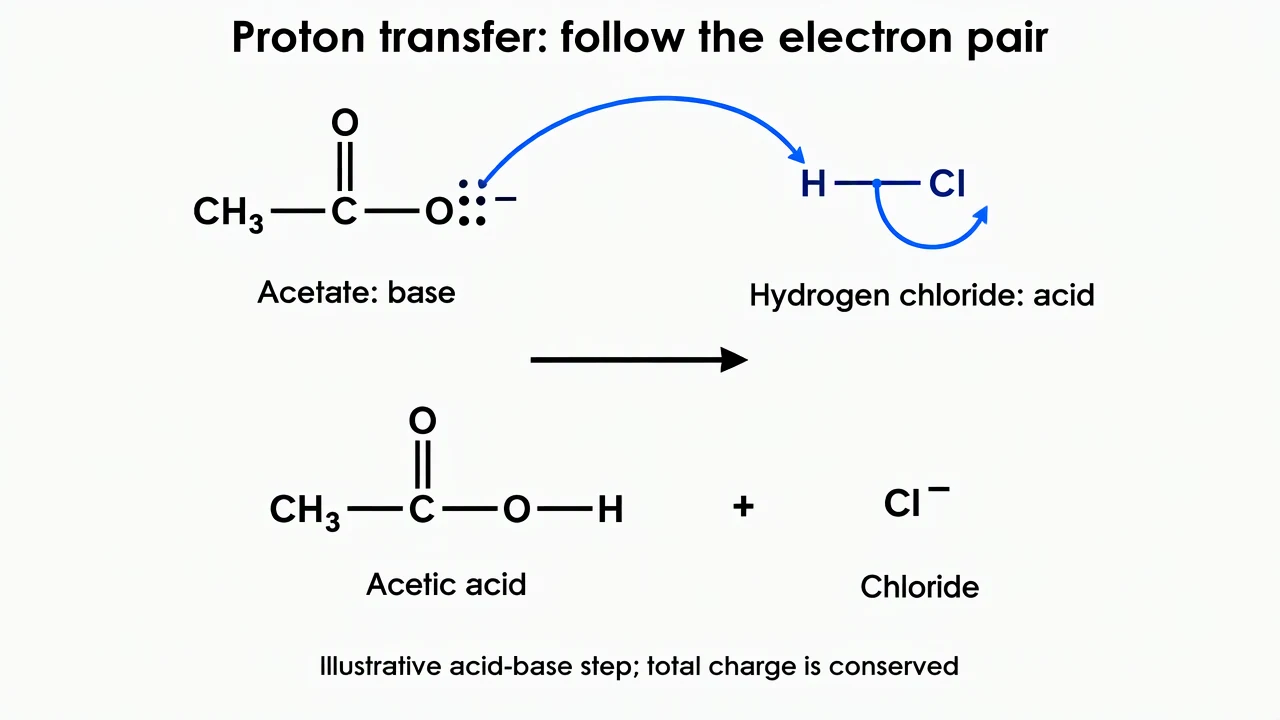
This reaction mechanism figure uses a proton transfer from hydrogen chloride to acetate. One electron-pair arrow runs from the negatively charged oxygen toward hydrogen; the other runs from the H–Cl bond toward chlorine. Products are acetic acid and chloride, preserving atoms and the total charge of −1. The example is illustrative rather than a condition-specific kinetic model.
Reaction Mechanism Figure Generator: reference key
Use the reference and definitions together. On a small screen, scroll the table horizontally.
| Element | Meaning | Review check |
|---|---|---|
| Lone pair or bond | The source of an electron pair | Place the curved-arrow tail on electrons, not on an unexplained empty position. |
| Curved arrowhead | The destination of electron movement | Distinguish attack on an atom from formation of a particular bond. |
| Straight reaction arrow | The overall step or transformation | Do not interpret it as the path traveled by an electron. |
| Formal charge | Electron bookkeeping for a structure | Update charges consistently after the indicated bond changes. |
| Intermediate | A species between mechanistic steps | Use valid valence and show relevant charge states. |
| Atom and charge balance | A consistency check | Conserve atoms and total charge across the stated closed chemical step. |
Reaction Mechanism Figure Generator: plan the content
A reaction mechanism figure must distinguish the straight reaction arrow from curved electron arrows. Start electron-pair arrows at a lone pair or bond and end them at the stated acceptor or bond-forming location.
State the actual step
Give the reaction mechanism figure generator the specific reacting species and protonation states rather than a vague reaction name.
Use one electron convention
A full-headed curved arrow represents an electron pair. Radical single-electron movement needs a different convention and a clear explanation.
Review products independently
Check the resulting structure after each bond change. A neat arrow cannot rescue an invalid valence or missing atom.
Common mistakes in a reaction mechanism figure
Starting an arrow at a positive proton
In the reference, the electron pair starts at the base’s oxygen. The proton accepts electron density; it is not the source of that pair.
Forgetting the breaking bond
Proton transfer from H–Cl also requires the bonding electron pair to move to chlorine. Omitting that arrow leaves the electron bookkeeping incomplete.
Confusing plausibility and validation
A reaction mechanism figure can depict a plausible route without proving it dominates under specific solvent, temperature or concentration conditions.
Reaction Mechanism Figure Generator: from brief to reviewed draft
Reading the reference is free. Generating a new draft requires an account and available credits. See current pricing.
Choose Science Drawing for an illustrated draft, or Editable Diagram for separate shapes and labels. Review all definitions, labels and connections before sharing.
- 1
Supply structures and intended changes
Tell the reaction mechanism figure generator the exact species, formal charges and proposed step.
- 2
Draft arrows with stated origins
Describe each electron source and destination and keep the overall reaction arrow visually distinct.
- 3
Check the reaction mechanism figure
Review valence, atom and charge balance, intermediate identity and any stereochemical claims before using the draft.
Example brief for a reaction mechanism figure
Create a reaction mechanism figure for acetate accepting a proton from HCl to form acetic acid and chloride. Draw one single-headed curved arrow from an oxygen lone pair to hydrogen and one from the H–Cl bond to chlorine. Distinguish these from the straight reaction arrow. Show valid valence, conserve all atoms and total charge −1, and identify the scheme as an illustrative acid–base step.
Use this prompt in the generatorReaction Mechanism Figure Generator: common questions
What does the reaction mechanism figure generator do?
It drafts a chemistry illustration from your specified mechanism. It does not discover or computationally validate a reaction pathway.
Where should curved electron arrows begin?
For electron-pair arrows, begin at a lone pair or a bond. The arrow must account for an actual electron source.
What is the difference between a curved arrow and a reaction arrow?
A curved arrow tracks electron movement within a proposed step. A straight reaction arrow connects reactants with products or successive stages.
Does the example conserve charge?
Yes. Acetate plus neutral HCl has total charge −1; neutral acetic acid plus chloride also has total charge −1.
Can the reaction mechanism figure generator show radicals?
You can describe a radical scheme, but single-electron arrow conventions and the chemical validity require careful review. The reference example uses only electron-pair arrows.
Sources and editorial notes
Prepared by the AcaDraw product team. Source and diagram check: . This is a simplified educational model; independent expert review has not been completed. AI-generated drafts need checking against reliable references.
Read the reaction mechanism figure guide
A reaction mechanism figure must distinguish the straight reaction arrow from curved electron arrows. Start electron-pair arrows at a lone pair or bond and end them at the stated acceptor or bond-forming location.
Reaction Mechanism Figures: Electron Arrows, Charge, and Intermediates