Logic Model Generator
Use a logic model generator to explain how a program is expected to work. Separate resources and activities from outputs and changes in participants, then state the assumptions that connect them. A logic model is a planning hypothesis, not evidence that the program caused an outcome.
SEE ACADRAW IN ACTION
Science drawing, from idea to editable figure
Create a science illustration with AI. Refine drawings, build editable diagrams, and convert images to SVG.
Demos play as you scroll into view. Choose a feature to explore.
Trusted by students & researchers from 480+ universities
A global community spanning 60+ countries and regions, from QS top-ranked universities to leading research institutes
























University logos belong to their respective institutions and are shown solely to illustrate our user community. They do not imply any partnership or endorsement.
Tool overview
Explore the use cases, workflow, and key things to know.
Keep outputs observable
An output describes delivery: sessions, materials or participation. Define how it would be counted without inventing results.
Phrase outcomes as change
Expected improvements in confidence or behavior belong in outcomes. Later evaluation must check whether those changes occurred.
Expose the theory
Arrows stand for an expected connection. Write why an activity should lead to an outcome and what could prevent it.
Concept reference
Logic Model: a worked example
A fictional library literacy program links staff and books to weekly reading sessions, sessions delivered, reading confidence and sustained reading habits. The example distinguishes delivery from participant change and names attendance and school timetables as contextual assumptions.
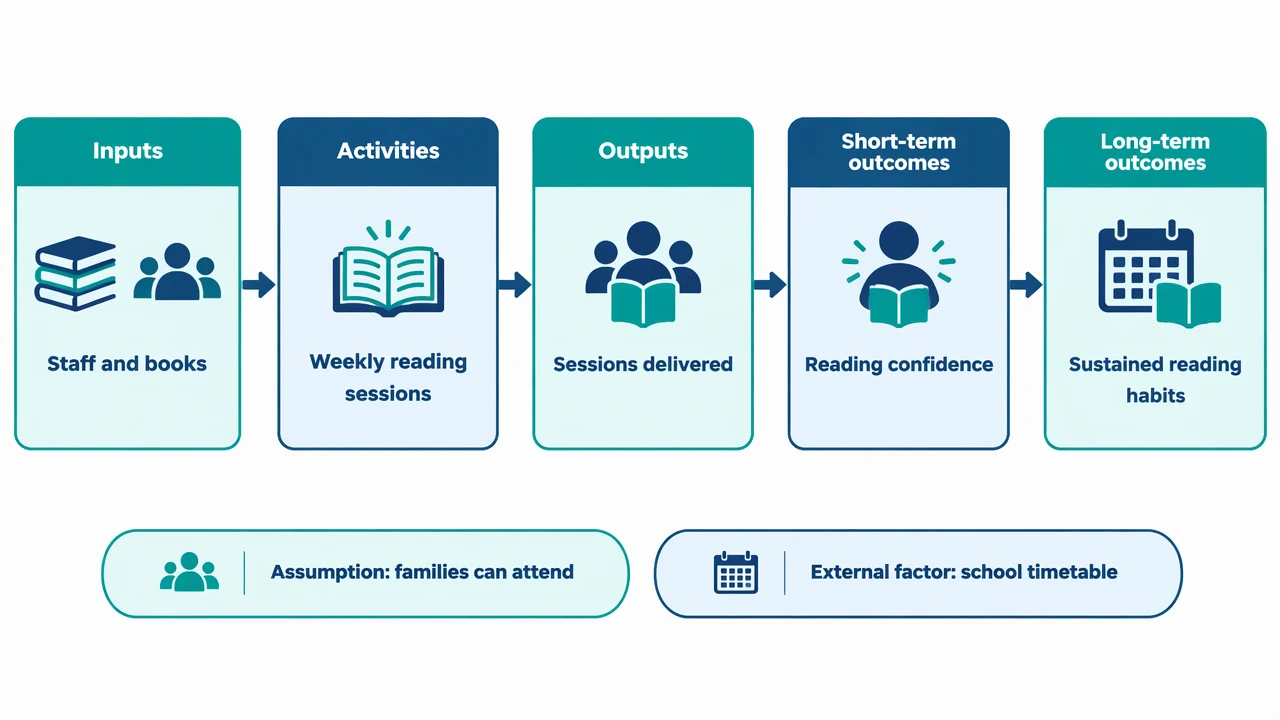
Logic Model reference key
Use the reference and definitions together. On a small screen, scroll the table horizontally.
| Element | Meaning | Review check |
|---|---|---|
| Inputs | Resources available to the program | Staff, materials, time and funding belong here. |
| Activities | What the program does | Describe the service or action, such as weekly reading sessions. |
| Outputs | Direct products of delivery | Sessions delivered are outputs; improved confidence is not. |
| Short-term outcomes | Initial changes expected in participants | Identify skills, knowledge, attitudes or access that could change. |
| Long-term outcomes | Later intended changes | Avoid claiming attribution before evaluation. |
| Assumptions and context | Conditions connecting the steps | State attendance, access and outside influences explicitly. |
Plan your logic model
Make the difference between doing work, counting delivery and observing change explicit.
Keep outputs observable
An output describes delivery: sessions, materials or participation. Define how it would be counted without inventing results.
Phrase outcomes as change
Expected improvements in confidence or behavior belong in outcomes. Later evaluation must check whether those changes occurred.
Expose the theory
Arrows stand for an expected connection. Write why an activity should lead to an outcome and what could prevent it.
Common mistakes to avoid
Activities counted as impact
Delivering ten sessions alone does not show that reading habits changed.
Invisible assumptions
Transport, attendance and staff continuity can affect the chain even when delivery follows the plan.
Causal certainty
A planned sequence is not an impact evaluation or a counterfactual comparison.
Logic Model Generator: from brief to checked draft
Reading the reference is free. Generating a new draft requires an account and available credits. See current pricing.
Choose Science Drawing for an illustrated draft, or Editable Diagram for separate shapes and labels. Review all definitions, labels and connections before sharing.
- 1
Define the program
State the population, need and resources available.
- 2
Build the chain
Separate activities, products and expected changes.
- 3
Challenge the assumptions
Review the arrows, outside influences and possible evaluation questions.
A prompt you can adapt
Create an editable logic model for a fictional library literacy program with Inputs: staff and books; Activities: weekly reading sessions; Outputs: sessions delivered; Short-term outcomes: reading confidence; Long-term outcomes: sustained reading habits. Add assumptions and external factors below the chain. Do not invent outcome data.
Use this prompt in the generatorLogic Model FAQ
What is a logic model?
It describes the expected relationship among program resources, activities, outputs and intended outcomes.
What is the difference between an output and an outcome?
An output is a direct product of delivery. An outcome is a change in knowledge, skills, behavior or conditions.
Does it demonstrate program impact?
No. It expresses an expected mechanism. Evaluation is needed to examine outcomes and causal attribution.
Can I add indicators?
Yes. Add proposed indicators and collection methods, clearly separated from results that have actually been measured.
Sources and editorial notes
Prepared by the AcaDraw product team. Source and diagram check: . This is a simplified educational model; independent expert review has not been completed. AI-generated drafts need checking against reliable references.
Explore the logic model guide
Make the difference between doing work, counting delivery and observing change explicit.
Logic Model: Connect Inputs, Outputs, and Outcomes