Dichotomous Key Maker
Use a dichotomous key maker to turn observable traits into a two-choice identification guide. Keep each decision mutually exclusive, use traits a reader can actually see and make every branch end at a clear identification.
SEE ACADRAW IN ACTION
Science drawing, from idea to editable figure
Create a science illustration with AI. Refine drawings, build editable diagrams, and convert images to SVG.
Demos play as you scroll into view. Choose a feature to explore.
Trusted by students & researchers from 480+ universities
A global community spanning 60+ countries and regions, from QS top-ranked universities to leading research institutes
























University logos belong to their respective institutions and are shown solely to illustrate our user community. They do not imply any partnership or endorsement.
Tool overview
Explore the use cases, workflow, and key things to know.
Use observable traits
Choose features a reader can see or measure consistently.
Make choices exclusive
The two options at each node should not overlap or leave a third option hidden.
End every path
A complete key leads every branch to one named endpoint or a clearly defined next question.
Concept reference
Dichotomous key reference: two-choice branching identification
This reference uses visible leaf traits such as lobes, edge texture and shape. Each question offers two contrasting choices and leads to a labeled endpoint. The fictional leaves are a teaching model, not a field guide for real species.
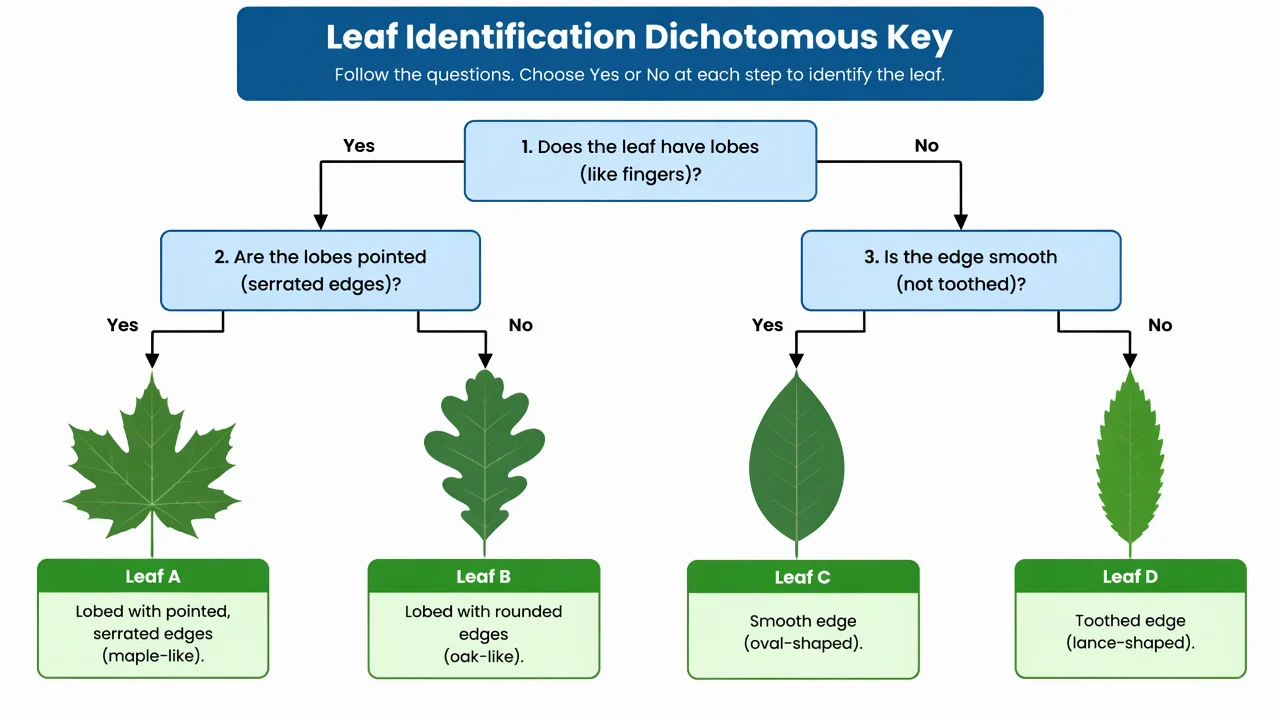
Dichotomous key design checklist
Use the reference and definitions together. On a small screen, scroll the table horizontally.
| Element | Purpose | Drawing check |
|---|---|---|
| Lead question | Starts the key with a broad, easy-to-observe distinction | Avoid a specialist trait before the reader has narrowed the options. |
| Paired choices | Offer two contrasting statements at each branch | Write both choices in parallel grammar and avoid “usually” on only one side. |
| Branch connector | Shows the yes/no or either/or path | Keep lines noncrossing and attach each branch to the correct question. |
| Endpoint | Names the identified object or group | Include a short note explaining the evidence for the endpoint. |
| Trait boundary | Defines the scope of the key | A key for fictional leaves should not imply it identifies every plant species. |
Build an identification key readers can follow
A dichotomous key is a decision tree. Its value comes from the quality and consistency of the paired observations, not from decorative branching.
Start broad
Separate the set with a trait that is easy to observe before using finer distinctions.
Use parallel language
“Leaves have lobes” and “Leaves do not have lobes” are easier to follow than mismatched sentences.
Test every path
Trace both choices at every node with sample objects to find dead ends and contradictions.
Common dichotomous key mistakes
Overlapping choices
Two choices that can both be true make the identification ambiguous.
Hidden exceptions
A key built around one unusual specimen should state the limits of the example set.
Dead-end branch
Every path should reach an endpoint or an intentionally defined next question.
Create your own dichotomous key diagram
Reading the reference is free. Generating a new draft requires an account and available credits. See current pricing.
Choose Science Drawing for an illustrated draft, or Editable Diagram for separate shapes and labels. Review all definitions, labels and connections before sharing.
- 1
List the objects
Write the exact set of leaves or specimens the key will identify.
- 2
Choose traits
Order reliable visible traits from broad to specific.
- 3
Walk every branch
Test each yes/no route and fix overlap, omissions or dead ends.
A prompt you can adapt
Create a clean, editable dichotomous key for four fictional leaves. Use two-choice yes/no questions based on lobes, edge texture and leaf shape, keep branches noncrossing, and end each path at a labeled leaf. State that the examples are fictional.
Use this prompt in the generatorDichotomous Key diagram FAQ
What is a dichotomous key?
It is an identification guide that repeatedly divides a set using two contrasting choices.
Can a dichotomous key have more than two choices?
Each decision should offer two alternatives. A larger key can still identify many objects through repeated binary branches.
What makes a good key trait?
A good trait is observable, consistent and useful for separating the remaining choices.
Can I use it for real species?
Use a generated draft as a planning aid and verify it against a trusted field guide or taxonomic source.
Can I edit the key?
Yes. Editable Diagram mode lets you adjust questions, branches and endpoint labels.
Sources and editorial notes
Prepared by the AcaDraw product team. Source and diagram check: . This is a simplified educational model; independent expert review has not been completed. AI-generated drafts need checking against reliable references.
Create a dichotomous key diagram for your lesson
Choose the scope, generate a draft, then review labels and connections before sharing.
Dichotomous Key Maker: Turn Observations into Two-Choice Decisions