Conceptual Framework Generator
A conceptual framework turns a research question into a visible set of constructs and proposed relationships. Use this generator to arrange inputs, mechanisms, context and outcomes, then mark what is assumed, measured or still to be tested.
SEE ACADRAW IN ACTION
Science drawing, from idea to editable figure
Create a science illustration with AI. Refine drawings, build editable diagrams, and convert images to SVG.
Demos play as you scroll into view. Choose a feature to explore.
Trusted by students & researchers from 480+ universities
A global community spanning 60+ countries and regions, from QS top-ranked universities to leading research institutes
























University logos belong to their respective institutions and are shown solely to illustrate our user community. They do not imply any partnership or endorsement.
Tool overview
Explore the use cases, workflow, and key things to know.
State the question
Write the population, context and outcome the model is meant to explain.
Map the constructs
Arrange context, inputs, mechanisms and outcomes with labeled proposed relationships.
Review the boundary
Ask which assumptions, moderators and excluded explanations a reader needs to see.
Concept reference
Conceptual framework: a worked reference
Inside the School context boundary, Training access and Practice opportunities connect separately to Skill confidence, which connects to Classroom adoption. These are proposed relationships for discussion; no effect sizes or measured results are shown.
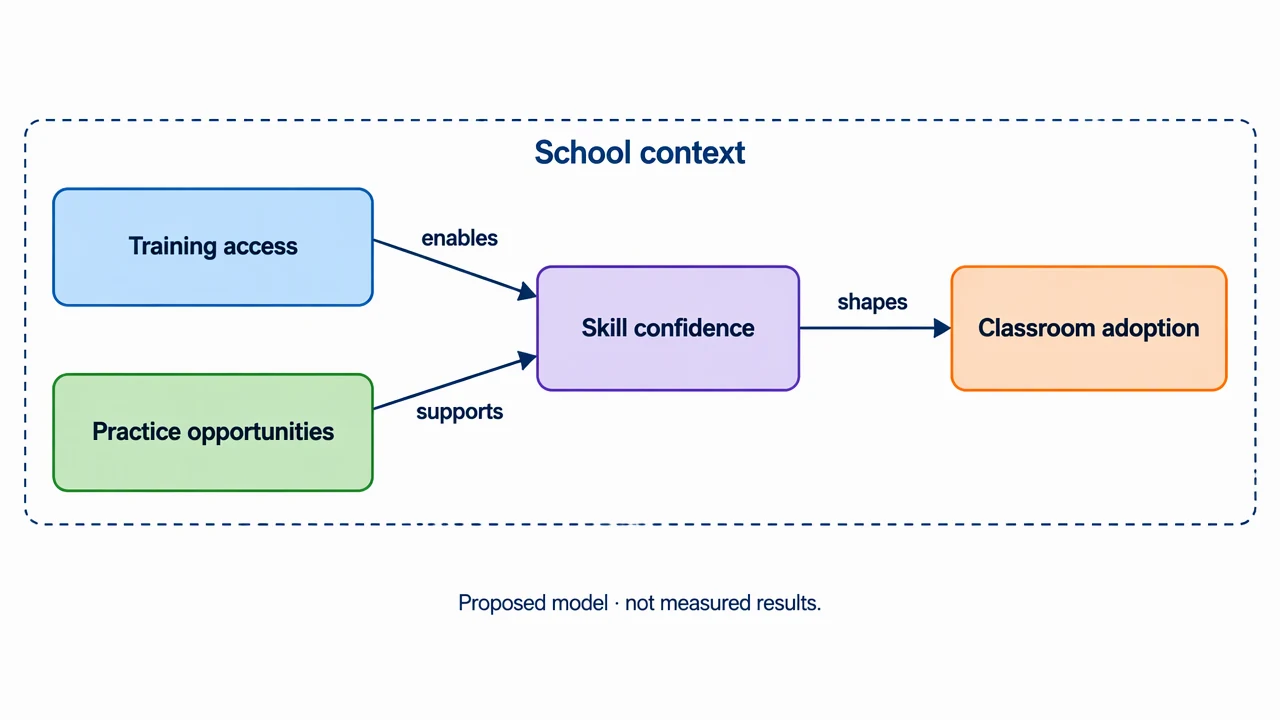
Conceptual framework element key
Use the reference and definitions together. On a small screen, scroll the table horizontally.
| Element | Meaning | Review check |
|---|---|---|
| Construct | An idea or variable in the model | Define it so readers know what is inside the box. |
| Relationship | A proposed connection between constructs | Label direction and meaning; do not imply a measured coefficient. |
| Context | A boundary or condition | State where the framework applies and what it leaves out. |
| Mechanism | How a change could occur | Separate the explanation from the outcome you hope to observe. |
| Scope note | A limit on interpretation | Mark assumptions and distinguish hypotheses from findings. |
Plan your conceptual framework
Keep a conceptual framework explicit about constructs, direction and scope. A draft is a reasoning aid, not evidence that a relationship exists.
Define before drawing
A box called engagement can hide several meanings. Give each construct a concise definition and a possible observable indicator.
Label the arrow
Supports, enables and moderates make different claims. An unlabeled arrow invites readers to overinterpret the relationship.
Separate model from evidence
A framework organizes a question. It does not establish that the pathways are true or quantify their strength.
Common mistakes to avoid
Mixing levels
Place a person-level behavior and an institution-level policy in the same role only when the cross-level relationship is explained.
Adding outcomes as facts
Use proposed or expected language until the study has evidence.
Overloading the canvas
Split a dense framework into a main model and a detail figure rather than shrinking every label.
Conceptual Framework Generator: from brief to checked draft
Reading the reference is free. Generating a new draft requires an account and available credits. See current pricing.
Choose Science Drawing for an illustrated draft, or Editable Diagram for separate shapes and labels. Review all definitions, labels and connections before sharing.
- 1
State the question
Write the population, context and outcome the model is meant to explain.
- 2
Map the constructs
Arrange context, inputs, mechanisms and outcomes with labeled proposed relationships.
- 3
Review the boundary
Ask which assumptions, moderators and excluded explanations a reader needs to see.
A prompt you can adapt
Create an original educational conceptual framework on a clean white landscape canvas. Show boxes labeled Training access, Practice opportunities, Skill confidence, Classroom adoption, and a boundary box School context. Use simple labeled arrows such as enables, supports, shapes; add a footer Proposed model · not measured results. No charts, percentages, logos, or fabricated findings. Render exact English labels clearly.
Use this prompt in the generatorConceptual Framework FAQ
What is a conceptual framework?
It is an organized model of constructs and their proposed relationships that guides a research question or project.
Is a conceptual framework a causal diagram?
It may include directional hypotheses, but the diagram alone does not prove causality or estimate effects.
Can I use observed results in the framework?
You can connect the model to evidence, but label observed findings separately from proposed pathways.
How is it different from a logic model?
A logic model emphasizes program inputs, activities, outputs and outcomes; a conceptual framework explains constructs and relationships more broadly.
Sources and editorial notes
Prepared by the AcaDraw product team. Source and diagram check: . This is a simplified educational model; independent expert review has not been completed. AI-generated drafts need checking against reliable references.
Explore the conceptual framework guide
Keep a conceptual framework explicit about constructs, direction and scope. A draft is a reasoning aid, not evidence that a relationship exists.
Conceptual Framework: Variables, Relationships, and Scope