Research and learning tools
Figure Legend Generator
Use the figure legend generator to organize verified descriptions of an existing figure into a copyable text draft. Enter the title, panels, methods, symbols and limitations yourself; the builder combines those details without inferring missing results.
Build a figure legend
Free local builder · no account or credits
Enter only details you have checked against an existing figure. No image or text is uploaded.
Each field accepts up to 3,000 characters.
Characters: 0
The builder assembles your text without checking factual accuracy or interpreting an image. Match the final legend to the figure, study record and journal instructions.
SEE ACADRAW IN ACTION
Science drawing, from idea to editable figure
Create a science illustration with AI. Refine drawings, build editable diagrams, and convert images to SVG.
Demos play as you scroll into view. Choose a feature to explore.
Trusted by students & researchers from 480+ universities
A global community spanning 60+ countries and regions, from QS top-ranked universities to leading research institutes























University logos belong to their respective institutions and are shown solely to illustrate our user community. They do not imply any partnership or endorsement.
Tool overview
Explore the use cases, workflow, and key things to know.
Inventory the figure
List panels, labels, symbols, scale and the question the image addresses.
Draft the structure
Write concise descriptions and methods from the verified source record.
Audit every sentence
Compare the legend with the figure and underlying analysis before submission.
Concept reference
Figure legend: a worked reference
The reference shows a four-part legend scaffold: Question, Panels and labels, Methods and scale, Interpretation and limits. It is a writing aid for an existing figure, not a substitute for the underlying methods or data.
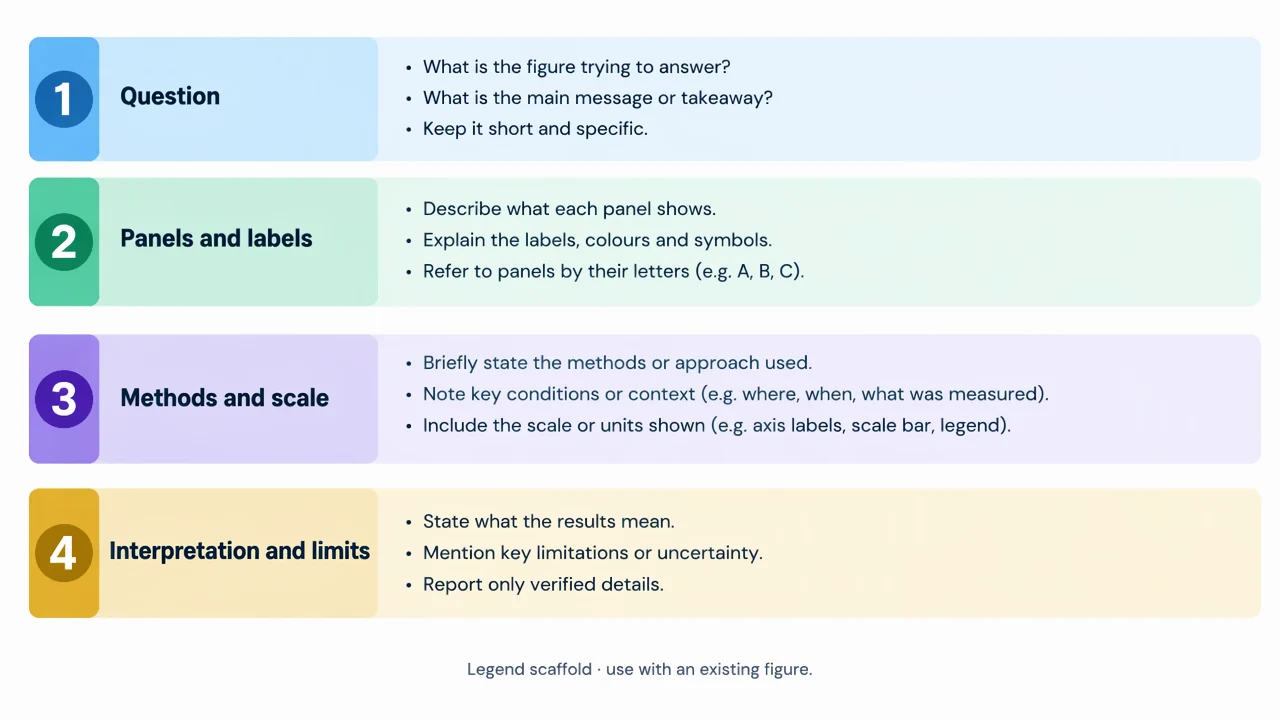
Figure legend element key
Use the reference and definitions together. On a small screen, scroll the table horizontally.
| Element | Meaning | Review check |
|---|---|---|
| Question | Why the figure exists | State the scientific or explanatory question in one sentence. |
| Panel map | What each panel, mark or color means | Define labels, symbols, groups and abbreviations. |
| Methods and scale | How the image was made and measured | Include relevant method, scale bar, units or sample details from the source. |
| Result statement | What the figure supports | Use only claims supported by the figure and analysis. |
| Limit | What the figure cannot show | Avoid extending an image beyond its design or evidence. |
Plan your figure legend
A legend explains an existing figure; it should not manufacture methods, sample sizes or findings that are absent from the source.
Describe before interpreting
Start with what is visibly shown, then explain the interpretation supported by the source.
Keep methods traceable
A legend can summarize methods, but it cannot replace the full protocol or add missing details.
State the scale
Readers need units, scale bars, magnification or image-processing notes when those affect interpretation.
Common mistakes to avoid
Invented sample details
Never fill a missing n, p-value, dose or time point with a plausible guess.
Undefined colors
A palette is not a legend. Explain what each color or symbol encodes.
Overclaiming from one panel
Match the interpretation to the analysis and scope of the complete figure.
Build a figure legend from verified details
The figure legend builder runs in your browser without an account, credits or image upload. It assembles the facts you enter; it does not use AI to infer details from a figure.
Check the draft against the actual figure and the journal instructions. Leave unknown values out until verified; never substitute a plausible number.
- 1
Inventory the figure
List panels, labels, symbols, scale and the question the image addresses.
- 2
Draft the structure
Write concise descriptions and methods from the verified source record.
- 3
Audit every sentence
Compare the legend with the figure and underlying analysis before submission.
Before you copy the legend
Check panel letters, methods, units, scale bars, abbreviations and the exact scope of the interpretation against your existing figure. Include sample details and statistics only when verified from the study record.
Return to the legend builderFigure Legend FAQ
What is a figure legend?
It is the explanatory text that identifies what a figure shows, how it was produced and how it should be interpreted.
Does the generator analyze an uploaded image or raw data?
No. This local builder combines the verified text you enter. It does not upload images, analyze data, infer methods or invent missing results.
Should a legend include methods?
Include the methods needed to understand the image, while keeping the full protocol in the methods section.
What if a detail is missing?
Leave a placeholder or verify the source. Do not invent a number or claim to make the prose sound complete.
Sources and editorial notes
Prepared by the AcaDraw product team. Source and diagram check: . This is a simplified educational model; independent expert review has not been completed. AI-generated drafts need checking against reliable references.
Explore the figure legend guide
A legend explains an existing figure; it should not manufacture methods, sample sizes or findings that are absent from the source.
Figure Legend: Explain What the Reader Is Seeing and How